
If you’ve ever dreamed of running your own web hosting company but thought it required massive investment or technical expertise, think again. Thanks to cPanel reseller hosting, anyone can now start a hosting business with minimal setup costs and zero server management headaches. In simple terms, reseller hosting allows you to buy hosting resources in bulk and resell them under your own brand. It’s a business model that combines low overhead, steady monthly income, and complete control over branding, all while leveraging the infrastructure of established data centers. With the global web hosting industry projected to surpass $170 billion by 2030, now is the perfect time to get started. Whether you’re a freelancer, digital agency, or entrepreneur looking to add a new revenue stream, this guide will walk you through every step, showing you exactly how to start a hosting business, from choosing your niche and setting up cPanel/WHM to automating billing and growing your customer base.
Why Start a Hosting Business?
The web hosting industry is booming. Valued at over $56 billion in 2020, it’s projected to exceed $170 billion by 2030. As businesses and individuals continue to go online, the demand for hosting services grows ever stronger. Learning how to start a hosting business today means tapping into one of the fastest-growing digital industries in the world. Starting a hosting business gives you:
- Recurring income: predictable monthly revenue.
- Low investment: start with reseller hosting instead of servers.
- Scalability: expand as your customer base grows.
- Brand control: sell hosting under your own company name.
If you’re a freelancer, agency owner, or entrepreneur, reseller hosting is the easiest and most profitable way to enter this market. Here is a step-by-step guide to setting up a hosting business.
Step 1: Understand How Reseller Hosting Works
Before you start, it’s important to understand how reseller hosting works. Knowing this is the first step in learning how to start a hosting business the right way.
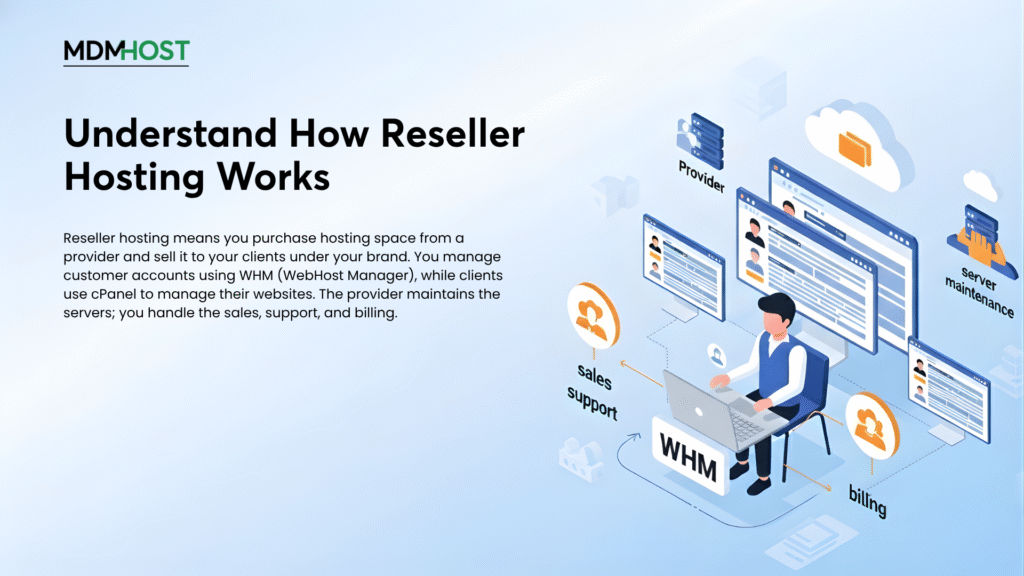
Reseller hosting means you purchase hosting space from a provider and sell it to your clients under your brand. You manage customer accounts using WHM (WebHost Manager), while clients use cPanel to manage their websites. The provider maintains the servers; you handle the sales, support, and billing.
Benefits of Reseller Hosting
Low startup cost: no need for your own hardware.
Scalable model: upgrade as your client base grows.
Full branding control: white-label everything.
Automated systems: billing, backups, and management.
This approach is perfect for freelancers, agencies, and beginners who want to start a reseller hosting business with minimal investment.
Step 2: Identify Your Target Market
Customer segmentation is key. Decide who you’ll serve and how you’ll position your hosting services.
Examples: Freelancers need portfolio hosting. Small businesses are looking for affordable web hosting. Bloggers want fast and secure WordPress hosting. Agencies want to bundle hosting with web design. Build buyer personas that define their needs, uptime, reliability, support, and design your hosting packages around them.
Step 3: Choose the Right Reseller Hosting Provider
Your provider is the foundation of your business. Look for these features:
99.9% uptime guarantee
NVMe or SSD storage
Free SSL & DDoS protection
White-label support and branding
WHM/cPanel integration
24/7 live chat support
Bundled WHMCS or billing automation
Pro Tip: Always test the provider first. Measure loading speed, uptime, and customer support response times before committing.
Step 4: Set Up Your Brand and Website
Your brand is how people perceive your hosting business. Create a professional, trustworthy identity:
– Choose a domain: short, memorable, and tech-friendly.
– Design your website: clear plans, pricing, and CTA buttons.
– Add trust signals: SSL, uptime badges, and testimonials.
– Set up a professional email: support@yourdomain.com.
A clean, fast, and well-structured website builds trust and converts visitors into paying customers.
Step 5: cPanel Reseller Hosting Tutorial
Let’s get technical. Here’s how to launch a web hosting business using cPanel.
- Access WHM: your control panel to manage accounts.
- Set up nameservers: ns1.yourdomain.com and ns2.yourdomain.com.
- Brand customization: upload your logo, color scheme, and contact info.
- Create hosting packages: define disk space, bandwidth, emails, and domains.
- Set up client accounts: each new client gets their own cPanel.
- Secure your environment: enable SSL, backups, and two-factor authentication.
- Test everything: create a sample account and ensure smooth provisioning.
Example Hosting Plans:
| Plan | Storage | Bandwidth | Emails | Add-ons | Price/mo |
| Starter | 10 GB SSD | Unmetered | 10 | 0 | $9 |
| Business | 25 GB SSD | Unmetered | 25 | 2 | $19 |
| Pro | 50 GB SSD | Unmetered | 50 | 5 | $29 |
Step 6: Automate Billing and Support
Use WHMCS to automate key business functions:
Customer sign-up and provisioning
Invoicing and payment reminders
Account suspension/reactivation
Ticketing and support
Add-ons and upsells (SSLs, backups, domains)
Integrate payment gateways like Stripe or PayPal. Enable automated renewals and two-factor authentication for security.
Step 7: Build Your Marketing System
Even the best hosting business can fail without effective marketing. If you truly want to master how to start a hosting business and grow it successfully, borrow ideas from proven brands:
Use SEO and Content Marketing
Rank for keywords like affordable hosting, reseller hosting, or managed cPanel hosting. Publish blogs that teach, not sell.
Social Media & Partnerships
Share customer success stories on LinkedIn, X, and Facebook, and partner with agencies or developers who can refer clients in exchange for commissions.
Offer Promotions
First-month discounts, referral programs, or free migrations help attract your initial clients.
Step 8: The Reseller Hosting Business Model
Let’s talk numbers. The reseller hosting business model runs on predictable recurring revenue.
Example: Reseller plan cost: $35/month, 40 clients paying $12/month = $480/month, Profit after costs: around $400/month. That’s 60–70% gross margin, and it scales. Upsell opportunities:
- Premium SSLs ($9/mo)
- Website care plans ($39–$99/mo)
- Security and backups ($10–$20/mo)
Step 9: Provide Excellent Support
Customer support makes or breaks your hosting business. Even cheap hosting can shine if your support is great.
Best practices: Respond quickly and professionally. Use canned replies for common issues. Create a knowledge base with tutorials. Offer live chat and ticket options.
Step 10: Scale Beyond Reseller Hosting
Once your client base grows, upgrade your infrastructure:
- Move to VPS hosting for more control.
- Transition to dedicated servers for high-traffic clients.
- Add more features like email marketing or site management.
This gradual upgrade keeps costs low while expanding your earning potential.
Conclusion
You don’t need a data center or a huge investment to learn how to start a hosting business. With cPanel reseller hosting, you can create your own hosting brand, sell packages, and build a recurring income stream. Start small, automate everything, and focus on delivering great support. As your business scales, upgrade your hosting plan and watch your profits grow.
Frequently Asked Questions
Is reseller hosting profitable?
Yes. With proper pricing and automation, it can generate recurring monthly income with high margins, making it one of the best ways to start a hosting business affordably.
How much do I need to start?
As little as $20–$50/month for a reseller plan and a WHMCS license, a small investment if you’re exploring how to start a hosting business from scratch.
Do I need technical skills?
Basic knowledge of cPanel/WHM is enough. Most providers manage servers for you, so you can focus on growing your hosting brand.
How do I get my first customers?
Leverage your network, offer referral bonuses, and market on social media or niche communities. These are some of the easiest and most effective ways to begin when learning how to start a hosting business.
Can I upgrade later?
Absolutely. Start with reseller hosting, then scale to VPS or dedicated servers as you grow your customer base.