
Web hosting is the foundation of every website, acting as the digital space where all your site’s files, images, and content are stored. Choosing the right hosting is more than just a technical decision; it directly affects how web hosting affects SEO. A reliable host ensures fast server response times, minimal downtime, and robust security, all of which are crucial for search engine rankings.
Different types of hosting, including shared hosting, VPS hosting, dedicated hosting, and cloud hosting, offer varying levels of speed, control, and reliability. For example, slow-loading websites caused by low-quality shared servers can increase bounce rates, negatively impacting the impact of hosting on website SEO. On the other hand, high-performance hosts improve SEO benefits of reliable hosting, providing a smooth user experience that search engines reward. Ultimately, web hosting sets the stage for both user satisfaction and higher rankings on SERPs.
Types of Hosting and SEO Impact
The type of web hosting you choose significantly influences how web hosting affects SEO. Shared hosting is the most affordable option, ideal for small websites or blogs. However, because multiple sites share the same server resources, speed and uptime can suffer, which may negatively impact whether server speed affects SEO rankings.VPS hosting offers dedicated resources within a virtual environment, providing better performance and scalability. This ensures that your website can handle traffic spikes without slowing down, boosting SEO benefits of reliable hosting. Dedicated hosting gives complete control of a server, enabling high-speed performance, advanced security, and customization perfect for high-traffic websites or e-commerce stores.
How Hosting Speed Affects Rankings
Website speed is a critical factor in how web hosting affects SEO. Slow-loading websites frustrate visitors, increase bounce rates, and negatively impact the impact of hosting on website SEO. Server response times are particularly important; the faster your server responds, the quicker your pages load, providing a better user experience. Implementing a Content Delivery Network (CDN) can improve site speed by distributing content across servers closer to your visitors. Caching also reduces page load times by storing temporary copies of pages for quicker access. Even minor improvements in speed can boost server speed and affect SEO rankings.
Hosting Uptime and Search Engines
Hosting uptime and search engine ranking are closely connected. Uptime refers to the time your website remains online and accessible. Frequent downtime reduces crawl efficiency, lowers impact of hosting on website SEO, and frustrates visitors. Search engines like Google may penalize websites that are often offline. Reliable hosting providers guarantee at least 99.9% uptime, ensuring that pages remain accessible to both users and crawlers. High uptime enhances trust, boosts engagement, and indirectly improves how web hosting affects SEO.
Security and SSL for SEO
Security is a critical component of how web hosting affects SEO. Websites with weak security are vulnerable to hacks, malware, and DDoS attacks, which can lead to downtime and a loss in impact of hosting on website SEO. Installing SSL certificates encrypts user data and signals trustworthiness to search engines, boosting rankings. DDoS protection and regular software updates further safeguard your website. Secure hosting also reduces bounce rates, improves user confidence, and contributes to SEO benefits of reliable hosting. Security is no longer optionalit is a vital factor for long-term SEO performance.
Server Location and Geo-Targeting
Server location influences how quickly content loads for users in specific regions, affecting how web hosting affects SEO. Hosting servers near your target audience reduces latency, enhancing the user experience and impact of hosting on website SEO. According to John Mueller, server location does not directly determine rankings but affects speed and performance metrics. Optimized hosting with geo-targeting ensures better user satisfaction and improved server speed affects SEO rankings.
Backups and Redundancy for SEO
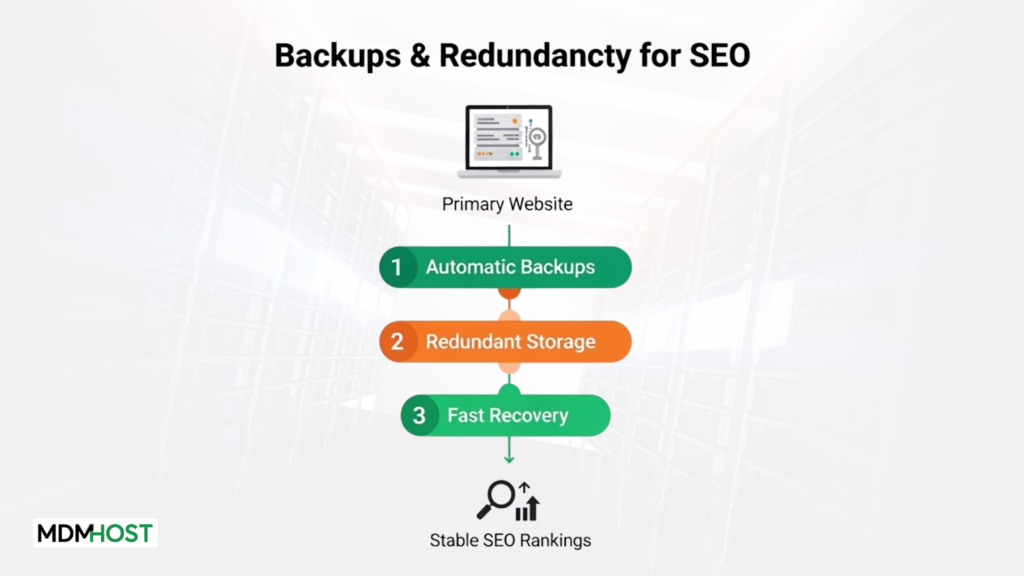
Regular backups and redundancy are crucial in how web hosting affects SEO. Data loss from server crashes, hacks, or system failures can severely impact the impact of hosting on website SEO and search rankings. Hosting providers like InMotion and A2 Hosting offer automatic backup solutions, minimizing risk and maintaining website stability. Consistent uptime and reliable recovery systems reassure both visitors and search engines, ensuring your site retains visibility in SERPs.
Caching and Performance Optimization
Caching is a technique that stores temporary versions of your website pages to reduce load times. Effective caching directly improves server speed, affects SEO rankings and demonstrates the SEO benefits of reliable hosting.
By minimizing server load, caching ensures fast delivery of content, which enhances how web hosting affects SEO. Hosting providers often integrate server-side caching, enabling high-speed performance for visitors and search engines. When combined with a CDN, cached content reaches users globally in milliseconds. Optimized caching reduces bounce rates and encourages higher engagement, both of which strengthen your impact of hosting on website SEO.
Green Hosting and SEO Advantages
Eco-friendly or green hosting uses renewable energy and energy-efficient servers. While indirectly, it contributes to how web hosting affects SEO by enhancing brand image, attracting eco-conscious users, and generating backlinks.
Impact of hosting on website SEO includes increased organic mentions, press coverage, and social signals. Modern green hosts also utilize optimized hardware, improving server speed affects SEO rankings. Choosing sustainable hosting solutions reinforces your website’s reliability and supports the SEO benefits of reliable hosting by combining performance, security, and corporate responsibility.
Choosing the Right Hosting Provider
Selecting a hosting provider influences how web hosting affects SEO significantly. Providers like HostGator, GoDaddy Hosting, InMotion, and A2 Hosting are trusted for high uptime, fast speeds, strong security, and reliable support.
Evaluate options based on your site’s size, traffic, and technical needs. Small businesses may prioritize affordability with shared or VPS hosting, while large enterprises benefit from dedicated or cloud servers.
SEO Hosting for Advanced Strategies
SEO hosting uses multiple C-Class IP addresses to host websites, providing advanced linking and local SEO opportunities. This strategy enhances how web hosting affects SEO for marketers managing multiple domains.
By separating sites across unique IPs while maintaining reliable servers, businesses improve the impact of hosting on website SEO and reduce risks of penalties. Combined with fast servers, high uptime, and robust backups, SEO hosting maximizes SEO benefits of reliable hosting. This approach is ideal for agencies, enterprises, or marketers looking to scale SEO across multiple properties efficiently.
Hosting Choices That Boost SEO
Every hosting decision from type to provider, speed, and security affects how does web hosting affects SEO. High-performance hosting ensures fast load times, strong uptime, and reliable security, all contributing to the impact of hosting on website SEO.
Investing in quality hosting delivers multiple SEO benefits of reliable hosting, including improved user experience, reduced bounce rates, and better crawlability. Incorporating CDNs, caching, SSL, and geo-targeting further strengthens rankings. For sustainable growth, choose a host that aligns with your SEO objectives, whether small business, e-commerce, or enterprise-level websites. Hosting is not just technicalit’s a strategic SEO decision that drives long-term visibility.
Conclusion
The choice of web hosting plays a crucial role in how web hosting affects SEO. From server speed and uptime to security, backups, and advanced features like caching or CDNs, every aspect influences the impact of hosting on website SEO. Reliable hosting ensures faster load times, better user experience, and improved search engine rankings, providing clear SEO benefits of reliable hosting.
By selecting the right type of hosting whether shared, VPS, dedicated, or cloud and partnering with trusted providers like HostGator, GoDaddy Hosting, InMotion, or A2 Hosting, websites can maintain high availability, stability, and performance. A well-optimized host not only supports your SEO strategy but also enhances brand credibility and user trust. In today’s competitive digital landscape, investing in high-quality hosting is not just technicalit’s a strategic step toward sustained search engine success.
FAQs
1. How does web hosting affect SEO?
Web hosting directly influences how web hosting affects SEO by affecting server speed, uptime, and security. A slow or unreliable host can increase bounce rates and reduce crawl efficiency, negatively impacting search rankings. Choosing a high-performance host ensures better SEO benefits of reliable hosting and improved impact of hosting on website SEO.
2. Does server speed affect SEO rankings?
Yes. Does server speed affect SEO rankings significantly? Faster server response times improve page load speed, enhance user experience, and boost rankings on SERPs. Hosting providers with optimized servers, CDNs, and caching solutions ensure websites maintain SEO benefits of reliable hosting.
3. How important is hosting uptime for SEO?
Hosting uptime and search engine ranking are closely connected. Websites with frequent downtime risk lower crawl rates, lost traffic, and decreased rankings. Reliable hosts with 99.9% uptime guarantees protect your site’s impact of hosting on website SEO while improving SEO benefits of reliable hosting.
4. Which type of hosting is best for SEO?
The best hosting depends on your website’s size and traffic. VPS hosting and dedicated hosting offer faster speeds, more control, and higher stability, providing greater SEO benefits of reliable hosting. Shared hosting may suffice for small sites but can limit speed, impacting does server speed affect SEO rankings.
5. Can changing hosting affect SEO?
Yes, migrating to a new host can temporarily impact how web hosting affects SEO if not managed carefully. Proper backups, redirects, and minimal downtime are essential to maintain hosting uptime and search engine ranking and to retain impact of hosting on website SEO.